


3. CALCULATION OF CONCENTRIC TUBES HEAT EXCHANGERS
3.6. Comparison counter flow-parallel flow
Below is a graph to see what configuration (parallel or counter) should be use:
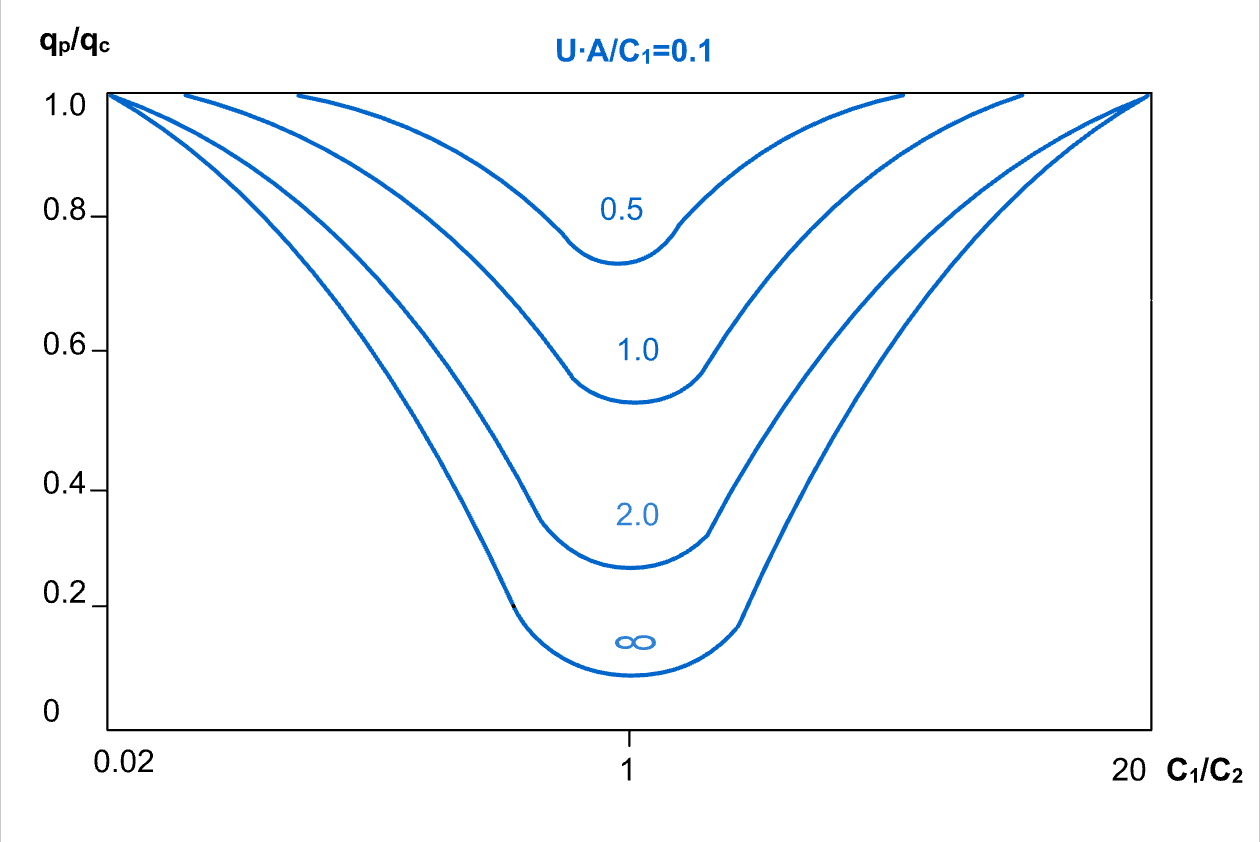
Where:
qp/qc = ratio of heat configuration in parallel and in counter.
C1/C2= ratio of total heat capacities.
Explained the following cases referred to above graph:
A) If C1/C2 is small :
then, ∆T1 > ∆T2
Equating the two heat fluxes (q):
C1 · ∆T1 = C2 · ∆T2
Fixed expression:

In this case we could also use the configuration you want (counter or parallel) , because we get qp similar to qc, that is, we get to qp/qc=1.0.
B) If C1/C2 is large:
then, ∆T2/∆T1 is also large, so:
∆T1< ∆T2
Equating the two heat fluxes (q):
C1 · ∆T1 = C2 · ∆T2
Fixed expression:
In this case we could also use the configuration you want (counter or parallel) , because we get qp similar to qc, that is, we get to qp/qc=1.0.
C) If U·A/C1 is very small:
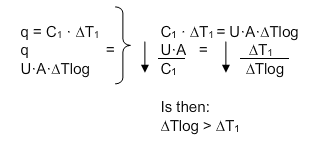
In this case we could also use the configuration you want (counter or parallel) , because we get qp similar to qc, that is, we get to qp/qc=1.0.

For example, if we have a ratio of heat capacities C1/C2 = 15 and U·A/C1 = 2.0:
the graph you will find a list of ratios of heat qp/qc=0.75;
if qc= 1Kcal, qp= 0.75 Kcal. So we see that the counter configuration will be more effective than the parallel configuration because the heat of counter configuration is greater.
In short, when we find the three previous cases, you can use the configurations you want (counter or parallel), in contrast to other cases will be against the best configurations to use.